

Les meilleurs livres Web sémantique
9 livres et 11 critiques, dernière mise à jour le 29 décembre 2014 , note moyenne : 5
Les meilleurs livres Web sémantique
- Web sémantique et modélisation ontologique (avec G-OWL) - Guide du développeur Java sous Eclipse
- Semantic Web for the Working Ontologist - Effective Modeling in Rdfs and Owl
- Programming the Semantic Web
- Semantic Web for the Working Ontologist, 2nd Edition - Effective Modeling in Rdfs and Owl
- Semantic Web Programming
- Learning SPARQL
- Le web sémantique - Comment lier les données et les schémas sur le web ?
- Web de données
- Le Web sémantique en bibliothèque
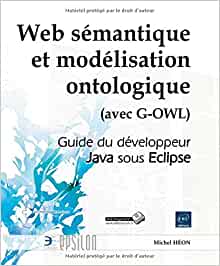


Web sémantique et modélisation ontologique (avec G-OWL)
Guide du développeur Java sous Eclipse
Résumé de l'éditeur
Respectant la séquence de présentation du W3C OWL-2 Primer, chaque élément d'expressivité de la modélisation ontologique est repris, expliqué et schématisé dans le langage G-OWL avant d'être défini en Java dans la syntaxe du Java OWL-API. Une démonstration de raisonnement logique complémente la discussion concernant l'expressivité. En tant que fichier informatique, le document ontologique possède des caractéristiques de traitement qui lui sont propres ; une section du livre est consacrée à la manipulation Java du document ontologique ainsi qu'à la manipulation Java des paramètres du raisonneur.
L'auteur conclut son livre en réalisant un projet de synthèse, en Java, sur l'implantation d'un arbre de décisions à base d'ontologies.
Des éléments complémentaires sont en téléchargement sur le site www.editions-eni.fr.
Édition : ENI - 444 pages, 1re édition, 1er avril 2014
ISBN10 : 274608869X - ISBN13 : 9782746088696
- Avant-propos
- Écosystème et architecture du Web sémantique
- Représentation des connaissances et ontologie
- Écosystème de développement
- Structure documentaire d'une ontologie
- Raisonneur et la logique des descriptions
- Fondamentaux de la modélisation ontologique
- Expressivités avancées d'OWL
- Propriétés associées à un type de données
- Information documentaire et annotation
- Projet : l'arbre de décision Onto-DeTal
- Conclusion
 Commenter
Signaler un problème
Commenter
Signaler un problème
Guide du développeur Java sous Eclipse

Respectant la séquence de présentation du W3C OWL-2 Primer, chaque élément d'expressivité de la modélisation ontologique est repris, expliqué et schématisé dans le langage G-OWL avant d'être défini en Java dans la syntaxe du Java OWL-API. Une démonstration de raisonnement logique complémente la discussion concernant l'expressivité. En tant que fichier informatique, le document ontologique possède des caractéristiques de traitement qui lui sont propres ; une section du livre est consacrée à la manipulation Java du document ontologique ainsi qu'à la manipulation Java des paramètres du raisonneur.
L'auteur conclut son livre en réalisant un projet de synthèse, en Java, sur l'implantation d'un arbre de décisions à base d'ontologies.
Des éléments complémentaires sont en téléchargement sur le site www.editions-eni.fr.
[Lire la suite]
- Avez-vous lu ce livre ou pensez-vous le lire ?
- Souhaitez-vous ajouter une critique de ce livre sur la page de la rubrique ?
- Avez-vous un commentaire à faire ?

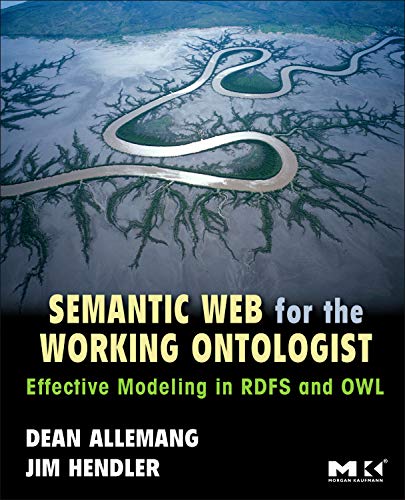

Semantic Web for the Working Ontologist
Effective Modeling in Rdfs and Owl
Résumé de l'éditeur
Semantic Web for the Working Ontologist transforms this information into the practical knowledge that programmers and subject domain experts need. Authors Allemang and Hendler begin with solutions to the basic problems, but don't stop there: they demonstrate how to develop your own solutions to problems of increasing complexity and ensure that your skills will keep pace with the continued evolution of the Semantic Web.
Provides practical information for all programmers and subject matter experts engaged in modeling data to fit the requirements of the Semantic Web.
De-emphasizes algorithms and proofs, focusing instead on real-world problems, creative solutions, and highly illustrative examples.
Presents detailed, ready-to-apply "recipes" for use in many specific situations.
Shows how to create new recipes from RDF, RDFS, and OWL constructs.
Édition : Morgan Kaufmann - 352 pages, 1re édition, 1er mai 2008
ISBN10 : 0123735564 - ISBN13 : 9780123735560
- What is the Semantic Web?
- Semantic Modeling
- RDF - The Basis of Semantic Web
- Semantic Web Application Architecture
- RDF and Inferencing
- RDF Schema
- RDFS-Plus
- Using RDFS-Plus in the Wild
- Basic OWL
- Counting and Sets in OWL
- Using OWL in the Wild
- Good and Bad Modeling Practices
- OWL Levels and Logic
On vise ici une compréhension du Web sémantique, de ses concepts du point de vue du praticien, de celui qui va utiliser le Web sémantique pour l'apporter au plus grand nombre. Il doit donc bien comprendre chacun des concepts, pas seulement les manières de les exprimer.
Par contre, en ligne de mire, on ne trouve pas une compréhension en profondeur et exhaustive des concepts liés : il s'agit avant tout d'une introduction au sujet. Après avoir lu ce livre, on peut s'aventurer plus loin dans son étude du domaine.
On notera la présence de chapitres In the Wild, présentant l'utilisation pratique d'un langage, un cas d'utilisation réel (pas simplement réaliste), ainsi qu'un Good and Bad Modeling Practices, présentant les avantages et inconvénients de certaines pratiques en matière de modélisation d'ontologies.
Commenter
Signaler un problème
Semantic Web for the Working Ontologist: Effective Modeling in Rdfs and Owl: Amazon.fr: Dean Allemang, James A. Hendler: Livres anglais et ?trangers@@AMEPARAM@@http://ecx.images-amazon.com/images/I/51LWJBFyjKL.@@AMEPARAM@@51LWJBFyjKL
Critique
Vous l'avez-lu ? Qu'en pensez-vous ?
merci

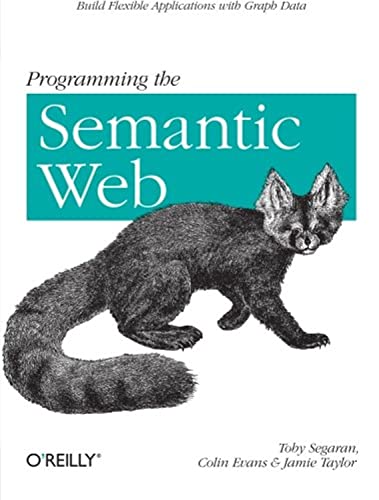
Programming the Semantic Web
Résumé de l'éditeur
Each chapter walks you through a single piece of semantic technology and explains how you can use it to solve real problems. Whether you're writing a simple mashup or maintaining a high-performance enterprise solution, Programming the Semantic Web provides a standard, flexible approach for integrating and future-proofing systems and data.
This book will help you :
- Learn how the Semantic Web allows new and unexpected uses of data to emerge
- Understand how semantic technologies promote data portability with a simple, abstract model for knowledge representation
- Become familiar with semantic standards, such as the Resource Description Framework (RDF) and the Web Ontology Language (OWL)
- Make use of semantic programming techniques to both enrich and simplify current web applications
Édition : O'Reilly - 304 pages, 1re édition, 1er juillet 2009
ISBN10 : 0596153813 - ISBN13 : 9780596153816
- Why Semantics ?
- Expressing Meaning
- Using Semantic Data
- Just Enough RDF
- Sources of Semantic Data
- What Do You Mean, “Ontology”?
- Publishing Semantic Data
- Overview of Toolkits
- Introspecting Objects from Data
- Tying It All Together
- The Giant Global Graph
Il est surtout axé sur la compréhension des ontologies et des différents formats que peut avoir le RDF. Une fois passé ces deux choses, le reste n'est juste que quelques pages d'introduction qui énoncent seulement le but et à quoi peuvent servir les chapitres sur les outils, et le framework en est un très bon exemple.
D'ailleurs, ce que j'ai le plus aimé dans ce livre, c'est l'introduction et la façon dont les auteurs nous amènent petit à petit à comprendre à quoi peut bien servir le Web sémantique et les avantages par rapport à d'autres méthodes.
Malheureusement, la simple lecture de ce livre ne fera pas de vous un expert dans le domaine, il vous faudra obligatoirement vous procurer d'autres ouvrages pour vraiment connaître celui-ci plus en détail.
Commenter
Signaler un problème
Programming the Semantic Web: Amazon.fr: Toby Segaran, Jamie Taylor, Colin Evans: Livres anglais et ?trangers@@AMEPARAM@@http://ecx.images-amazon.com/images/I/51VFUZqusaL.@@AMEPARAM@@51VFUZqusaL
Critique
Qu'en pensez-vous ? L'avez-vous lu ?
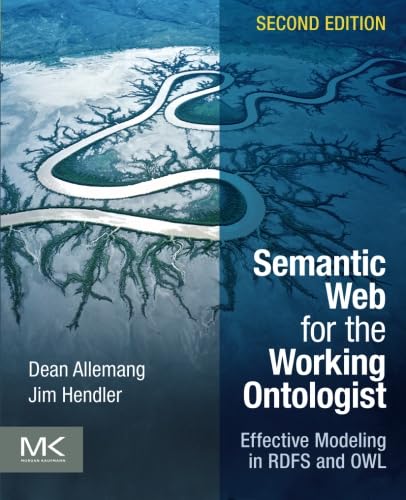
Semantic Web for the Working Ontologist, 2nd Edition
Effective Modeling in Rdfs and Owl
Résumé de l'éditeur
Édition : Morgan Kaufmann - 352 pages, 2e édition, 1er juillet 2001
ISBN10 : 0123859654 - ISBN13 : 9780123859655
- What is the Semantic Web?
- Semantic modeling
- RDF - The basis of the Semantic Web
- Semantic Web application architecture
- Querying the Semantic Web - SPARQL
- RDF and inferencing
- RDF schema
- RDFS - Plus
- Using RDFS - Plus in the wild
- SKOS - managing vocabularies with RDFS - Plus
- Basic OWL
- Counting and sets in OWL
- Ontologies on the Web - putting it all together
- Good and bad modeling practices
- Expert modeling in OWL
- Conclusions
Autrement dit, ce livre garde les mêmes avantages que sa première édition tout en rajoutant les dernières nouveautés en matière d'ontologie.
Commenter
Signaler un problème
Semantic Web for the Working Ontologist: Effective Modeling in Rdfs and Owl: Amazon.fr: Dean Allemang, James Hendler: Livres@@AMEPARAM@@http://ecx.images-amazon.com/images/I/51CI0qnpeXL.@@AMEPARAM@@51CI0qnpeXL
Critique
Qu'en pensez-vous ? L'avez-vous lu ?

Leur plume est agréable, et les chapitres bien construit avec un sommaire à la fin. Ce qui permet de parcourir le livre rapidement si besoin.
On comprend aussi facilement :
- les différences entre OWL1 et 2
- l'hitsorique des normes et standard
- et ouvre plusieurs sujets de réflexion sur l'avenir du WS (Web3.0?)
Je recommande
Les premières parties : "semantic web" et "semantic modeling" apportent une vue globale très intéressante.
Je le recommande vraiment.

Semantic Web Programming
Résumé de l'éditeur
Édition : Wiley - 648 pages, 1re édition, 1er avril 2009
ISBN10 : 047041801X - ISBN13 : 9780470418017
- Preparing to Program a Semantic Web of Data
- Hello Semantic Web World
- Modeling Information
- Incorporating Semantics
- Modeling Knowledge in the Real World
- Discovering Information
- Adding Rules
- Applying a Programming Framework
- Combining Information
- Aligning Information
- Sharing Information
- Developing and Using Semantic Services
- Managing Space and Time
- Semantic Web Patterns and Best Practices
- Moving Forward
Le livre se découpe en 4 parties. La première est une introduction au domaine, un état de l'art en quelque sorte. La seconde partie est beaucoup plus technique avec une explication des "fondations" du Web sémantique et surtout des outils que vous utiliserez. C'est dans cette partie que ce fait le plus apprentissage. Ensuite la troisième partie qui parle du développement d'applications, autrement dit ce chapitre vous montrera toutes les bonnes règles à adopter et respecter pour développer une bonne application. Pour finir, la quatrième et dernière partie portant sur l'utilisation et le développement des services sémantiques.
Le nombre de technologies que ce livre aborde est très conséquente. Avec RDF, RDFS, OWL 2, SIOC, Jena, RIF, RDFa, D2RQ, FOAF, SPARQL, Microformats et beaucoup d'autres.
Commenter
Signaler un problème
Semantic Web Programming: Amazon.fr: John Hebeler, Matthew Fisher, Ryan Blace, Andrew Perez-Lopez, Mike Dean: Livres anglais et ?trangers@@AMEPARAM@@http://ecx.images-amazon.com/images/I/51vbv64TL7L.@@AMEPARAM@@51vbv64TL7L
Critique
Qu'en pensez-vous ? L'avez-vous lu ?
alors je l'ai acheté il y a un moisje l'ai parcouru plus ou moins profondément suivant les parties (une semaine environ) puis je l'ai laissé un peu de côté mais seulement parce que le projet sur lequel je voulais travailler est un peu au point mort.
je suis d'accord avec la critique faite, et avec ce qu'en dit l'éditeur "Timely. Practical. Reliable". Je pense que c'est exactement l'outil que je recherchais et dont j'avais besoin, sachant que j'avais déjà des connaissances (OWL, ontologies, DL, rule engine) mais que certains concepts et mises en pratique restaient flous. Là différents cas pratiques, les avantages et inconvénients... sont bien décrits et le livre donne également une bonne vision d'ensemble (avec la description de l'ensemble des techniques) du Web Sémantique. Finalement des choses qu'avec le temps j'avais grosso-modo comprises sont maintenant (en très peu de temps) très claires et c'est grandement appréciable.
Je ferai peut-être une critique plus poussée lorsque je reprendrai mon projet car ce livre me sera assurément encore très utile.
Learning SPARQL
Résumé de l'éditeur
Begin with how to write and run simple SPARQL 1.1 queries, then dive into the language's powerful features and capabilities for manipulating the data you retrieve. Learn what you need to know to add to, update, and delete data in RDF datasets, and give web applications access to this data.
- Understand SPARQL's connection with RDF, the semantic web, and related specifications
- Query and combine data from local and remote sources
- Copy, convert, and create new RDF data
- Learn how datatype metadata, standardized functions, and extension functions contribute to your queries
- Incorporate SPARQL queries into web-based applications
Édition : O'Reilly - 258 pages, 2e édition, 1er octobre 2001
ISBN10 : 1449306594 - ISBN13 : 9781449306595
- Jumping Right In: Some Data and Some Queries
- The Semantic Web, RDF, and Linked Data (and SPARQL)
- SPARQL Queries: A Deeper Dive
- Copying, Creating, and Converting Data (and Finding Bad Data)
- Datatypes and Functions
- Updating Data with SPARQL
- Building Applications with SPARQL: A Brief Tour
Pour chaque fonctionnalité exposée on trouve un exemple ainsi on peut très facilement adapter ces exemples à un autre cas. Même la partie expliquant les requêtes CONSTRUCT, qui sont pour moi les plus difficiles à comprendre, est parfaitement abordée et compréhensible sans aucune ambiguïté. Le petit plus que j'ai beaucoup aimé est que l'auteur informe des extensions possibles ajoutées au langage par les outils les plus utilisés tels que ARQ ou Virtuoso.
Je n'ai pas trouvé de points négatifs sur ce livre car il est pour moi tout simplement excellent.
Commenter
Signaler un problème
L'avez-vous lu ? Qu'en avez-vous pensé ?

Le web sémantique
Comment lier les données et les schémas sur le web ?
Résumé de l'éditeur
Cet ouvrage offre dans un langage accessible une synthèse de ce qu'il faut aujourd'hui savoir du web sémantique. Il explique simplement quelles sont les techniques mises en œuvre et dresse un panorama des utilisations potentielles et des bénéfices attendus.
Édition : Dunod - 224 pages, 1re édition, 1er janvier 2012
ISBN10 : 2100572946 - ISBN13 : 9782100572946
- Un seul web
- Le web des données
- Sémantique des vocabulaires et inférences
- Règles d'inférence
- Ressources, outils et standards connexes
- Pour en finir avec quelques idées reçues
- Web et métadonnées ubiquitaires
Ce livre est destiné à divers publics : tant le décideur que l'étudiant, tous y trouveront leur compte, mais ne le liront pas de la même manière. Il est d'ailleurs prévu de la sorte : il n'est pas nécessaire de le lire de manière linéaire pour en apprécier le contenu. Pour avoir une vue d'ensemble du domaine, les chapitres 1 et 5 à 7 résument l'essentiel sans entrer dans les détails techniques ; celui qui cherche à se former plus spécifiquement sur la pile de standards se focalisera sur les chapitres 2 à 4, qui traitent des standards par ordre de dépendance (d'abord le framework RDF, puis les formalismes des vocabulaires pour finir sur les règles d'inférence).
Ainsi, le livre est bien structuré, pour faciliter une lecture rapide, une utilisation en tant que livre de référence, pour éviter de passer son temps sur des détails qui paraissent peu intéressants aux yeux du lecteur. Chaque chapitre débute par un encadré précisant les objectifs à atteindre et se finit par un autre encadré fournissant un résumé des notions abordées.
Ce n'est pas pour autant qu'on peut parler de livre de vulgarisation : la technique est très présente, les détails plus d'ordre théorique ne sont pas omis, des raccourcis trop rapides ne sont pas pris. Cependant, il reste accessible à tout public intéressé par les révolutions en cours dans le domaine du Web.
Après avoir lu ce livre, je pense que le Web sémantique pourra être qualifié de Web 3.0, car le croisement des données promet à terme une révolution des usages.
Mais contrairement au Web 2.0 qui a rapidement remplacé le Web 1.0, cette fois-ci, ce sera différent. Ce livre montre comment le Web sémantique vient en complément du Web actuel et non en remplaçant. Il montre également que le Web sémantique existe depuis déjà de nombreuses années, que des standards se sont progressivement mis en place, que des ontologies ont été créées, qu'il existe des milliards de triplets RDF et que ceci ne fait que commencer... D'ailleurs, j'ai particulièrement apprécié le chapitre qui recense les ontologies et sources de données existantes.
Comme tout projet ambitieux, on peut douter au départ de sa concrétisation. Le chapitre qui s'attaque aux idées reçues clarifie les choses. Si je pense toujours qu'il faudra atteindre un seuil critique pour qu'un cercle vertueux se mette en route, j'ai compris qu'on peut contribuer à ce grand projet simplement en partageant ses données sous une forme compréhensible par les machines. Ce livre présente tout ce qu'il faut pour le faire.
Certes, il est parfois un peu technique, mais il y a différents chemins de lecture. Dommage que ma route se soit brutalement interrompue : en lisant le titre du dernier chapitre, je m'attendais à autre chose ! En 12 lignes, c'est davantage une conclusion qu'un véritable chapitre.
Ce petit regret ne m'empêche pas de recommander cet ouvrage à ceux qui veulent construire le Web de demain.
Quasiment tous les aspects du domaine sont évoqués et expliqués, même un peu trop brièvement parfois. Mais nous sommes prévenus dès le début du livre que cet ouvrage est spécialement réalisé pour les personnes voulant une idée d'ensemble du domaine. Le format RDF, les ontologies et le principe d'inférence y sont parfaitement bien expliqués, on peut le comprendre car ce sont des parties importantes du domaine et que l'on doit avoir bien assimilées avant d'aller plus loin, c'est donc normal que les trois quarts du livre leur soient consacrés.
Malgré tout on reste un peu sur sa faim dans le sens où on ne nous explique pas (ou du moins vraiment pas assez) comment se passe le développement d'une application consacrée au Web sémantique, on donne juste quelques outils et c'est tout, personnellement j'aurais bien vu un petit chapitre décrivant point par point les étapes importantes avec les erreurs à ne pas commettre dans le développement d'une application. C'est pourquoi je conseille cet autre livre qui explique très bien ce qui peut manquer dans cet ouvrage. Ces deux ouvrages se complètent parfaitement. Une fois ces deux livres en votre possession vous aurez alors une excellente base dans le Web sémantique.
Pour finir, je conseille à 100 % l'obtention de ce livre à toute personne voulant débuter dans le domaine ou du moins en avoir une idée, cela vous évitera de vous plonger dans des ouvrages en anglais certes plus complets mais beaucoup plus longs et plus compliqués à assimiler mais surtout on ne s'y ennuie pas une seconde contrairement à certains de ces gros ouvrages anglais.
Commenter
Signaler un problème
Cet ouvrage offre dans un langage accessible une synthèse de ce qu'il faut aujourd'hui savoir du web sémantique. Il explique simplement quelles sont les techniques mises en œuvre et dresse un panorama des utilisations potentielles et des bénéfices attendus.
Critique de l'ouvrage Le web sémantique – Comment lier les données et les schémas sur le web ?

Web de données
Résumé de l'éditeur
Tout au long du livre, on suit l'avancement d'un projet exemple « Production Big Lynx » au fur et à mesure de son développement.
Il comporte des chapitres inédits, écrits pour l'édition française, spécifiques sur certaines notions : les ontologies (conception, définition, bonnes pratiques), les formats RDF (les différentes façons d'écrire du RDF) et les avantages de l'adoption du Web sémantique par les entreprises (référencement, accessibilité des données, faible coût).
Édition : Pearson Education - 232 pages, 1re édition, 15 mai 2012
ISBN10 : 2744047465 - ISBN13 : 9782744047466
- 01. Introduction
- 02. Principes des données liées
- 03. Le Web de données
- 04. Considérations de conception sur les données liées
- 05. Les formats de sérialisations plus en détails
- 06. Les ontologies plus en détails
- 07. Recettes pour publier des données liées
- 08. Consommer des données liées
- 09. L'entreprise et le Web sémantique
- 10. Conclusion et perspectives
Tout d'abord, je trouve que certains auteurs anglo-saxons d'ouvrages techniques et scientifiques ont de réelles capacités pédagogiques. Ils nous amènent à les suivre avec une remarquable progressivité de lecture.
Ensuite, le projet fictif « Production Big Lynx » qui sert de fil conducteur à travers les différents chapitres, c'est préférable à des exemples bateaux déconnectés les uns des autres. Enfin, ce livre est bien plus qu'une traduction ! Non content d'avoir actualisées certaines parties des chapitres originaux, les traducteurs (membres de Developpez.com), passionnés par le domaine du web de données, ont ajouté trois chapitres supplémentaires. Un premier plutôt technique sur les formats de représentation des triplets RDF avec leurs avantages/inconvénients. Un second plutôt conceptuel qui décrit plus en détail les ontologies. Et un dernier plus littéraire avec des dimensions historiques et économiques. Je salue cette initiative car ces trois ajouts viennent non seulement combler des lacunes de la version originale mais intègrent également le projet fictif initial dans leurs exemples.
Mon seul petit regret est que ce livre ne soit disponible qu'en format électronique. Je comprend que le public d'un tel ouvrage soit encore restreint mais les éditions papiers n'ont-elles pas un rôle marketing à jouer dans la démocratisation des connaissances?
En conclusion, si vous vous intéressez à l'avenir du web et aux moyens de le mettre en œuvre dès aujourd'hui, je vous recommande la lecture de cet ouvrage.
Commenter
Signaler un problème
Tout au long du livre, on suit l'avancement d'un projet exemple « Production Big Lynx » au fur et à mesure de son développement.
Il comporte des chapitres inédits, écrits pour l'édition française, spécifiques sur certaines notions : les ontologies (conception, définition, bonnes pratiques), les formats RDF (les différentes façons d'écrire du RDF) et les avantages de l'adoption du Web sémantique par les entreprises (référencement, accessibilité des données, faible coût).
Lire la critique de Benwit


Le Web sémantique en bibliothèque
Résumé de l'éditeur
Édition : Bibliothèques - 171 pages, 1re édition, 15 novembre 2013
ISBN10 : 2765414173 - ISBN13 : 9782765414179
- Du catalogue de bibliothèque aux données sur le Web : un changement de paradigme du côté de l'usager
- Convergence et interopérabilité : vers le Web de données
- Les promesses du Web de données en bibliothèque
- Publier des données en RDF
- Enrichir les pages Web
- Agréger et réutiliser des données
- Lier les données internes avec le LED
J'ai particulièrement apprécié la partie « Agréger et réutiliser des données » qui explique parfaitement la manière à suivre avec une grande rigueur et beaucoup de détails.
Néanmoins, j'ai pu y voir deux petites choses qui m'ont un peu dérangé (en tant que personne avertie du domaine) :
- beaucoup de termes comme RDF, RDFS ou SPARQL on été utilisés avant que l'on détaille ce que c'est et à quoi ils servent. Cela peut facilement dérouter le lecteur qui se demandera « c'est quoi ça, pourquoi elle parle de ça ? Aurais-je mal lu ou compris une partie du livre avant d'en arriver là ? » alors que ces standards sont plutôt bien expliqués un peu plus tard dans le livre ;
- le manque de détails concernant les outils pour certaines étapes, comme la partie « publier des données en RDF » qui parle de R2RML, mais aucun outil afin de l'utiliser, ou encore pour la petite partie où l'on parle d'interconnexion, il aurait été sympa d'indiquer comment réaliser cette étape ou du moins avec quels outils.
Pour conclure, le lecteur, une fois le livre lu jusqu'à la fin, aura, on peut le dire, vraiment toutes les cartes en main afin de réaliser le jeu de données de sa bibliothèque et la publier. Je recommande aussi à ceux qui voudraient aller encore un peu plus loin de lire les ouvrages « Le Web sémantique : comment lier les données et les schémas sur le Web » et « Web de données : méthodes et outils pour les données liées ». Je ne peux donc que fortement recommander cet ouvrage à tous les bibliothécaires.
Commenter
Signaler un problème

Voici une critique du livre Le Web sémantique en bibliothèque :
J'ai particulièrement apprécié la partie « Agréger et réutiliser des données » qui explique parfaitement la manière à suivre avec une grande rigueur et beaucoup de détails.
Néanmoins, j'ai pu y voir deux petites choses qui m'ont un peu dérangé (en tant que personne avertie du domaine) :
- beaucoup de termes comme RDF, RDFS ou SPARQL on été utilisés avant que l'on détaille ce que c'est et à quoi ils servent. Cela peut facilement dérouter le lecteur qui se demandera « c'est quoi ça, pourquoi elle parle de ça ? Aurais-je mal lu ou compris une partie du livre avant d'en arriver là ? » alors que ces standards sont plutôt bien expliqués un peu plus tard dans le livre ;
- le manque de détails concernant les outils pour certaines étapes, comme la partie « publier des données en RDF » qui parle de R2RML, mais aucun outil afin de l'utiliser, ou encore pour la petite partie où l'on parle d'interconnexion, il aurait été sympa d'indiquer comment réaliser cette étape ou du moins avec quels outils.
Pour conclure, le lecteur, une fois le livre lu jusqu'à la fin, aura, on peut le dire, vraiment toutes les cartes en main afin de réaliser le jeu de données de sa bibliothèque et la publier. Je recommande aussi à ceux qui voudraient aller encore un peu plus loin de lire les ouvrages « Le Web sémantique : comment lier les données et les schémas sur le Web » et « Web de données : méthodes et outils pour les données liées ». Je ne peux donc que fortement recommander cet ouvrage à tous les bibliothécaires.